Seasons Captured in Glass:
The story behind Taiheiyu, a long-established sento
Taiheiyu is a sento (traditional Japanese bathhouse) established in 1956 located in the Zoshiki area in Ota City, Tokyo.
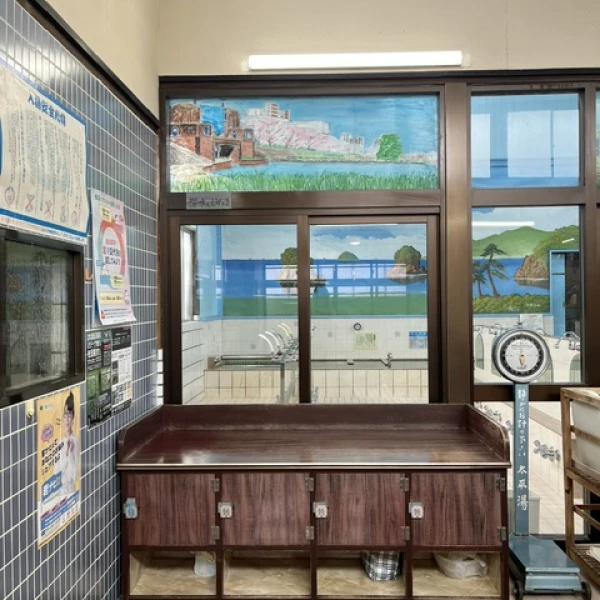
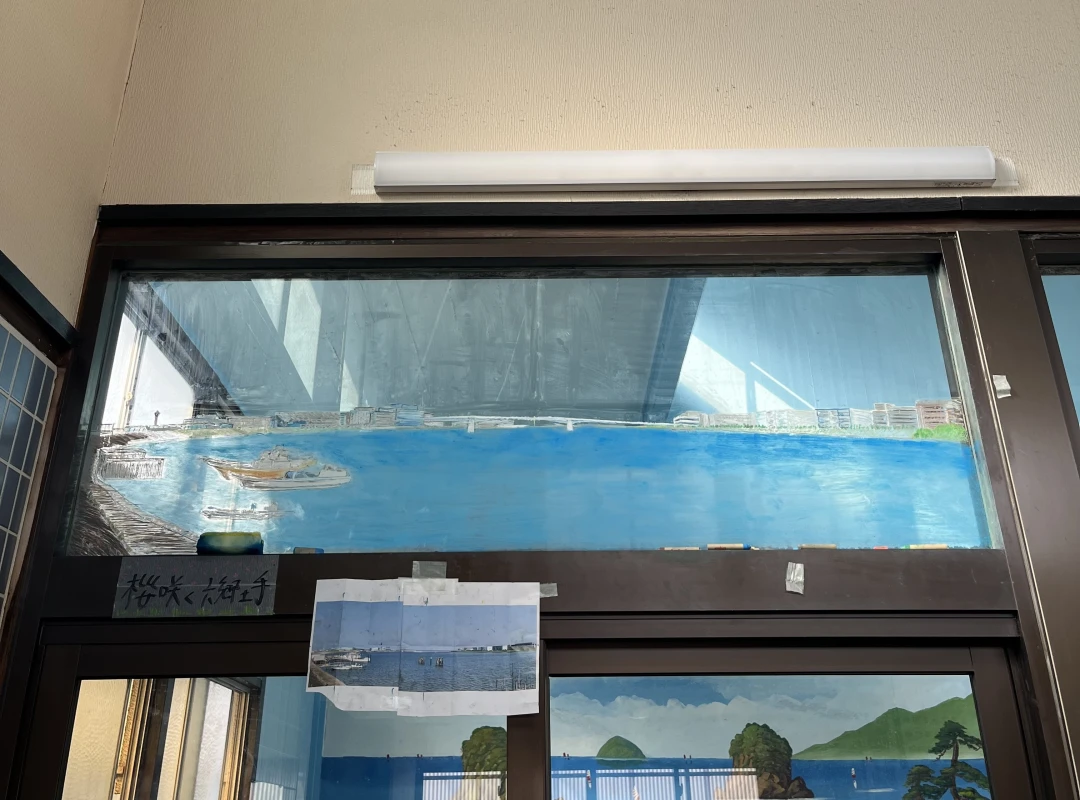
As explained in last month’s article, right in the entrance toward the bath area in Taiheiyu is a glass painting of different sights in Ota by the owner, Hirokazu Watanabe. Using the current season as his motif, Watanabe changes the paintings every season so that guests can enjoy the changes of the season. These seasonal paintings are a unique feature of this sento.
Why did Watanabe begin doing glass paintings for the sento?
Inspired by his experience as an occupational therapist, he wanted to give people in the local community a way to experience the changing seasons.
A neighborhood sento passed down for nearly 70 years
Taiheiyu was first run by Watanabe’s grandfather. Growing in the sento business, and seeing how his grandfather and father ran it, he naturally thought that he was going to take over the family business of running the sento as well.
Watanabe’s father, however, told him to pursue the dream that he genuinely wants. As the sento industry underwent significant changes, Watanabe decided to first pursue a path that interested him, working at a hospital as an occupational therapist for about 12 years.
Things took a turn when his father had to temporarily step away from the business in 2024. At this time, Watanabe genuinely began to think about taking over the business.
While working at a hospital, Watanabe also helped out with Taiheiyu at night. At the hospital, he would sometimes hear patients say, “I want to go to a sento.” Additionally, from his interactions with the sento’s regulars, Watanabe realized just how important the sento is to a lot of people even now.
Furthermore, facilities and equipment such as pipes and tiles will degrade without water running through them. “If we stop operations, the bathhouse will deteriorate.” With this in mind, Watanabe decided to take over Taiheiyu. Today, his father has also returned to working at the sento.
In Taiheiyu, many regulars come at a specific time and conversations between them naturally start, making the bathhouse come to life as one of the community spots where people in the area can gather.
Handmade glass art that brings seasons to life
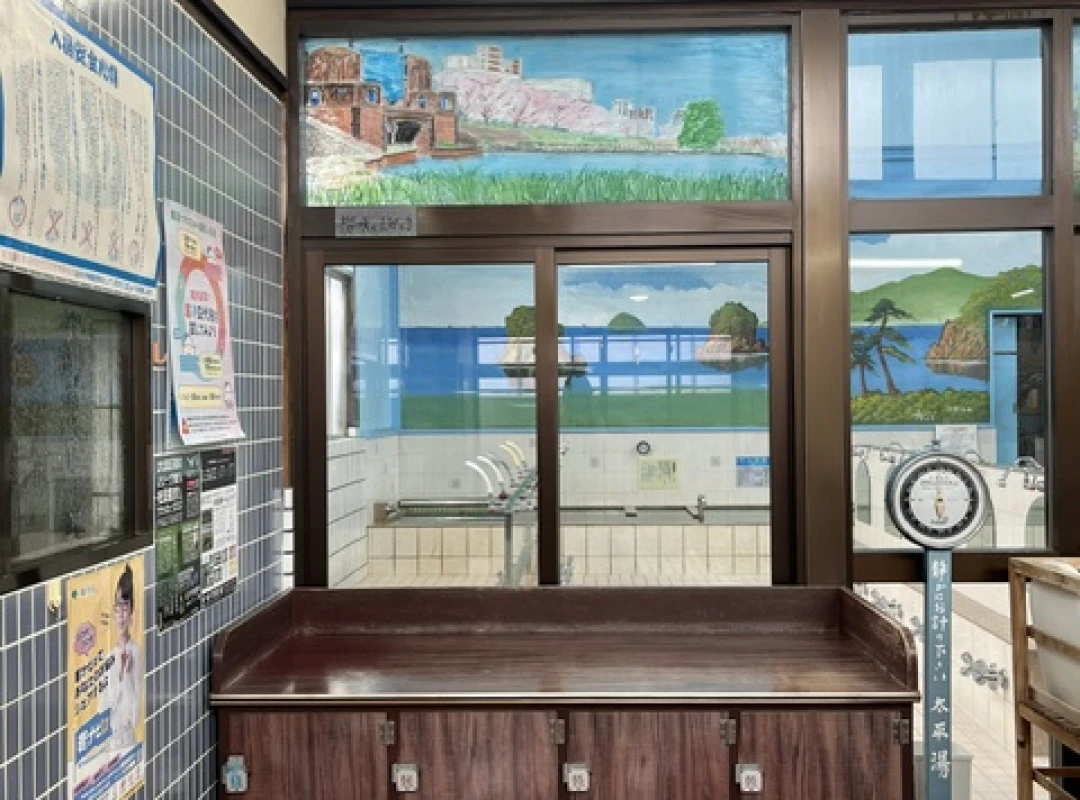
The stained-glass paintings that decorated the walls of the bathhouse began in 2018.
Watanabe says he had always enjoyed drawing, but one of the things that inspired him to start creating glass art was his experience working as an occupational therapist.
He worked with patients that had dementia and talked about one particular patient who always said “It’s December” no matter the season.
With the hospital’s sterile walls and the always air-conditioned rooms, it’s difficult for people to feel the seasons changing from inside the building. This is why Watanabe decided to do things such as decorating the walls with his patients or doing activities throughout the day that let his patients feel the changing seasons.
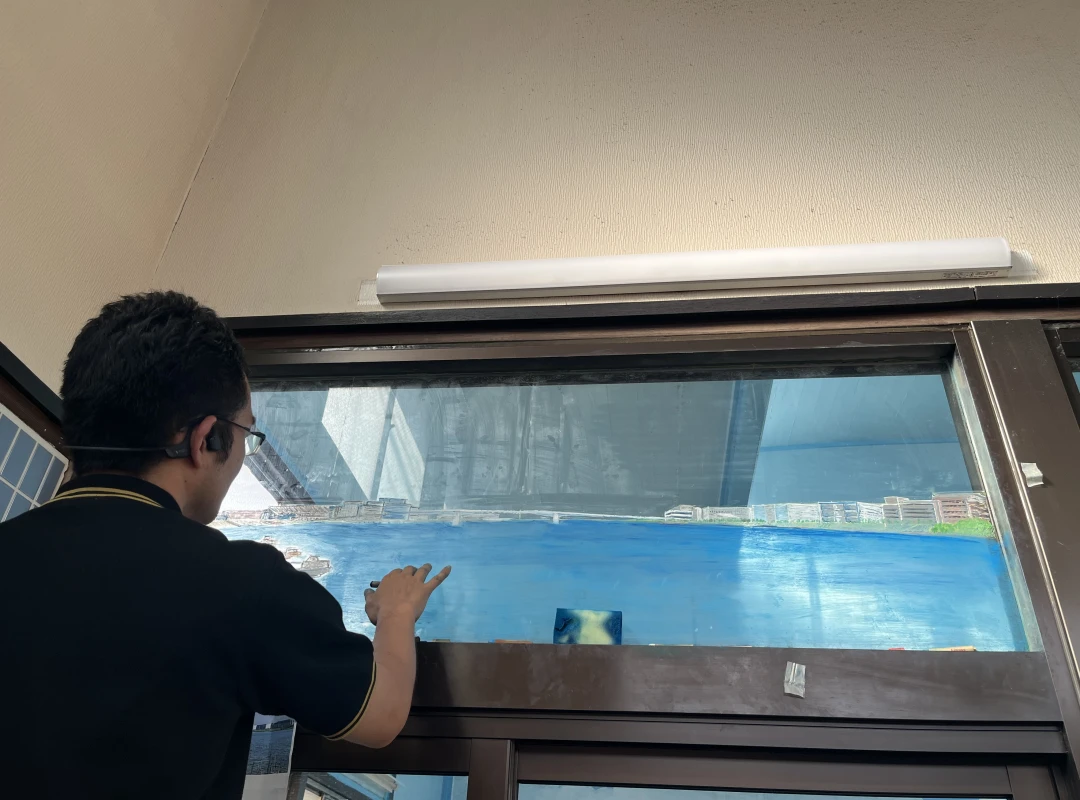
Through this experience, Watanabe came up with the idea of letting the sento visitors feel the changes in the seasons through the scenery of the glass paintings he creates. This is how he came to draw the different scenes within Ota City.
For some older people, pain in their legs or lower back can limit their daily lives to home and the immediate neighborhood. With this in mind, Watanabe wanted to create something that his neighbors could enjoy. This is a desire that is reflected in his glass art.
A homemade portrait of Ota City
Now, every season there is a new glass painting using Ota City scenery as its motif. Watanabe thinks it’s important to choose places that make the locals instantly think, “Oh, it’s this place!” with just one look. By depicting familiar scenes from everyday life, he hopes to create something that local residents can enjoy.
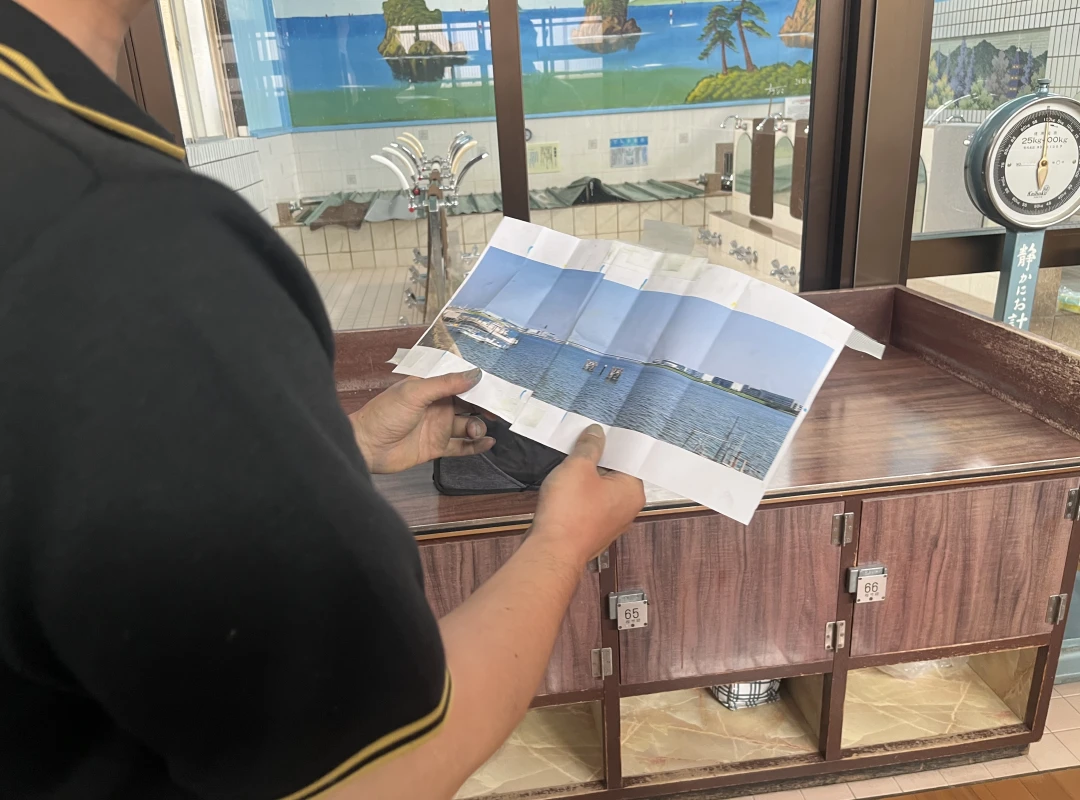
There are 4 paintings at Taiheiyu, each of which takes about a day to complete. There are also difficulties that come with working with glass. When it gets dark, glass starts to like a blackboard and the way you look at and work on it changes. This is why it’s best to complete the piece while there’s sunlight.
Watanabe used to do his glass paintings during the weekend when he was still working as an occupational therapist, and one of the reasons he continues painting is that he thinks that people would find it interesting if someone working in the bathhouse did the paintings.
Now, the glass paintings that greet customers during their visit to Taiheiyu is one of its unique points.
Tokyo's sento culture, passed down alongside handmade paintings
The glass paintings in the bath entrances aren’t the only unique qualities Taiheiyu has.
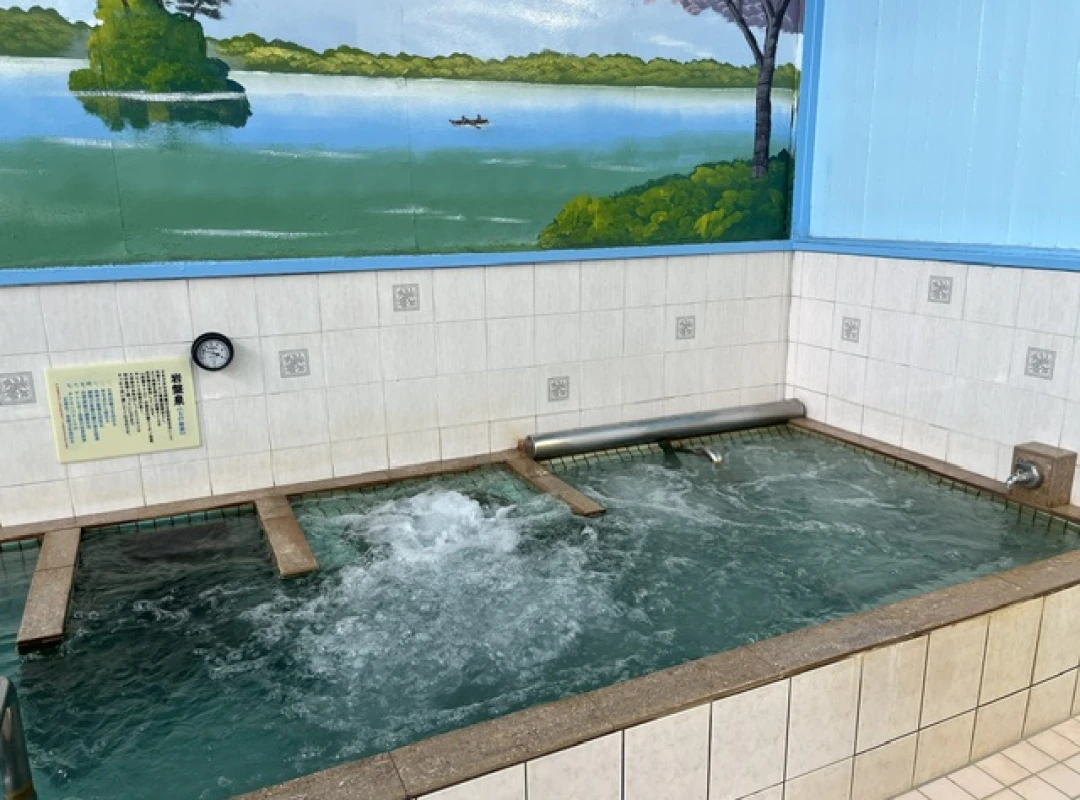
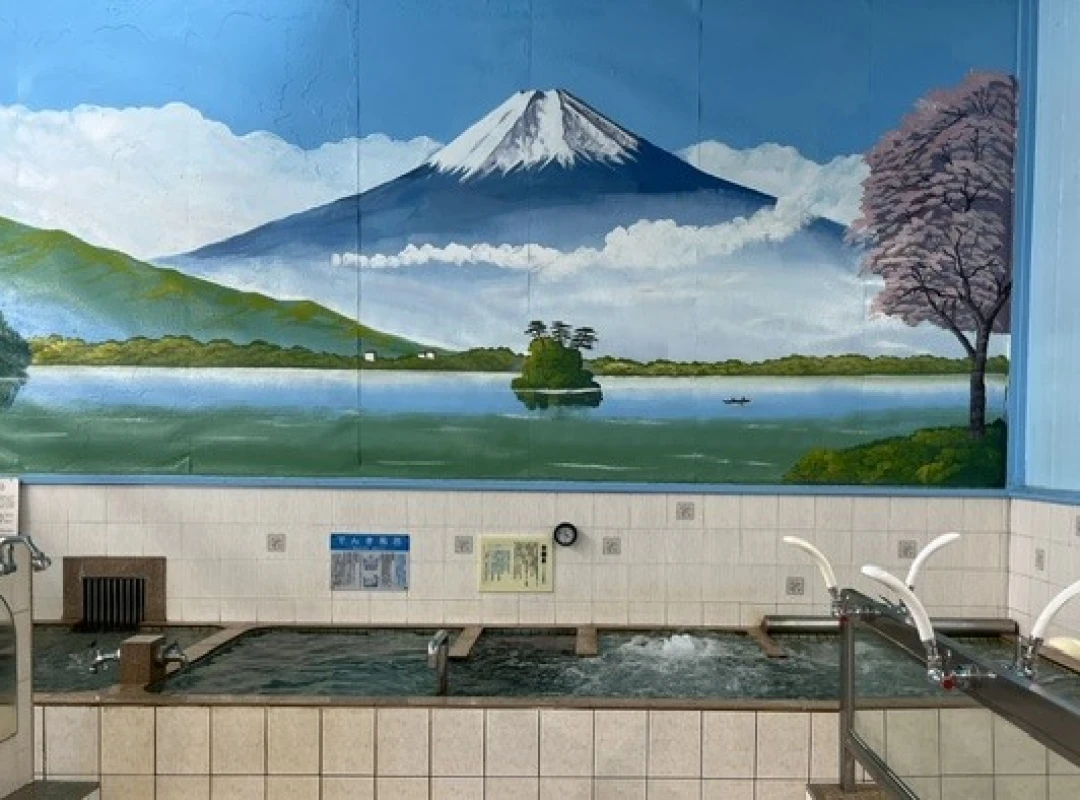
The bathing area features a mural of Mt. Fuji, an iconic symbol of Tokyo’s sento culture. The tradition of painting Mt. Fuji on sento walls is a uniquely Japanese custom that developed primarily in Tokyo.
While continuing a long-standing tradition within Japan’s bathhouse culture, Watanabe further adds an extra flavor to Taiheiyu’s uniqueness.
The sento is a very important part of Japanese culture, and a place for tourists to experience what a traditional day-in-the-life of a Japanese person is like
Hand-painted glass art reflecting the seasons, a Mt. Fuji mural, and connections with the local community.
With nearly 70 years of history, Taiheiyu embodies both the traditional sento culture of Tokyo and Watanabe’s dedication to preserving it for future generations.
Basic Information
Address: 1-5-17 Minami-rokugo, Ota City
Business Hours: 3:30PM-11:00PM (you can enter the bath up until 10:30PM)
Closed: Wednesdays & Fridays
Access: Keikyu Line – from Zoshiki Station (10 min walk)
Instagram: @taiheiyu
X: @taiheiyu
Latest Things to Do in Ota City
Explore more experiences from Ota City's Tourist Information Center
All Things to Do in Ota City